|
个人信息:Personal Information
副教授 硕士生导师
教师英文名称:Xiaoxi Li
教师拼音名称:lixiaoxi
所在单位:医学院
职称:副教授
毕业院校:分子细胞科学卓越创新中心
硕士生导师
学科:临床检验诊断学
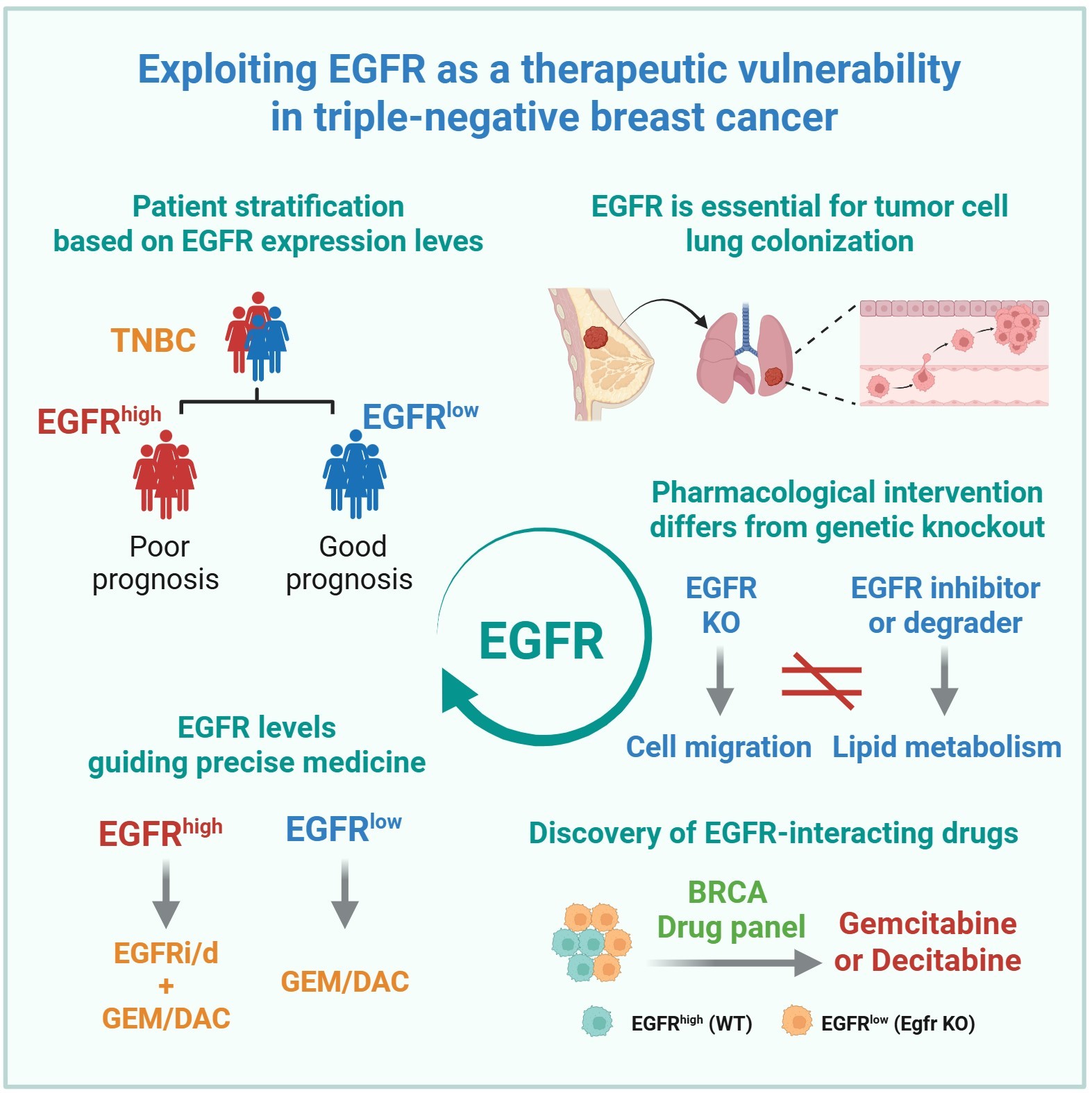
(4) Li Xiaoxi, Liu Ling, Luo Lingli, Deng Mingyao, Jiang yong, Ren Weijun, Qian Hui. Low-dose EGFR inhibition unlocks ferroptosis susceptibility to sensitize chemotherapy in EGFR- high triple-negative breast cancer, Journal of Biological Chemistry. 2026;302(7):113185.
Abstract: Triple-negative breast cancer (TNBC) is a highly heterogeneous subtype with a poor prognosis and limited therapeutics, for which metastasis is a primary driver. In this study, we explore the function of EGFR in breast cancer progression and the mechanistic basis of EGFR-targeted therapies, focusing on kinase inhibitors and protein degraders. In a murine breast cancer model, EGFR knockout exhibited minimal impact on primary tumor growth but significantly suppressed metastasis, supporting the clinical association between high EGFR expression and poor prognosis. At high doses, EGFR degraders exert their antitumor effect through kinase inhibition, not degradation, whereas low-dose EGFR inhibition has limited anti-proliferative activity. Gene-drug interaction screening identified gemcitabine (GEM) and decitabine (DAC) as agents interacting with EGFR, a finding confirmed by the observed resistance to these drugs in TNBC cell lines with high EGFR expression. Both low-dose EGFR degraders and inhibitors chemosensitize cells to GEM/DAC in vitro, with the EGFR degrader plus GEM combination exhibiting an enhanced inhibitory effect in a lung colonization model. Mechanistically, both low-dose EGFR degraders and inhibitors elevate ROS levels and induce lipid peroxidation, thereby sensitizing cancer cells to GEM/DAC-triggered ferroptosis. In summary, this study demonstrates that low-dose EGFR targeting creates a susceptible state for ferroptosis in tumor cells and, consequently, defines a combination therapy strategy of EGFR-targeted agents with chemotherapy for TNBC. Our results provide a foundation for the clinical translation of low-dose EGFR-targeting strategies and their rational combination with other agents.
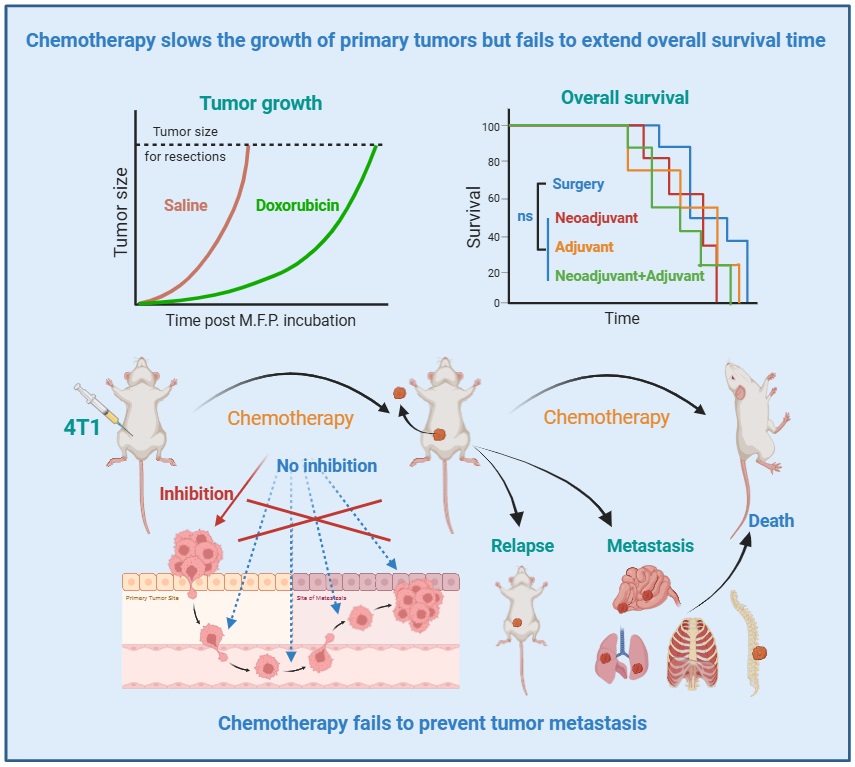
(3) Luo lingli, Liu Ling, Deng Mingyao, Jiang yong, Liu Chuan, Chen Xiang, Li Xiaoxi. The OtR tumor recurrence and metastasis model reveals doxorubicin‐induced tumor shrinkage doesn't guarantee prolonged survival. Animal Models and Experimental Medicine. 2026;9(1):207-214.
Abstract: Background: In preclinical research, tumor growth inhibition in subcutaneous models is frequently employed to evaluate therapeutic efficacy; however, such models often lack clinical translatability. Methods: To better approximate clinical reality, taking the case of doxorubicin treatment, we utilized an orthotopic transplant and resection (OtR) strategy to systematically assess the effects of neoadjuvant chemotherapy, adjuvant chemotherapy, and their combination on tumor growth, recurrence, and malignant progression. Results: Surprisingly, none of the treatments improved mouse survival, with adjuvant therapy even shortening it. Although neoadjuvant chemotherapy delayed preoperative tumor growth and all regimens reduced recurrence rates, none effectively prevented metastasis. Furthermore, all treatment groups exhibited weight loss, indicative of chemotherapy-induced cachexia. Conclusion: Collectively, these findings demonstrate that reduced tumor growth in preclinical mouse models does not necessarily translate into overall survival benefit. Our results emphasize the critical importance of prioritizing metastasis prevention over tumor growth inhibition as a key efficacy endpoint in antitumor drug evaluation.
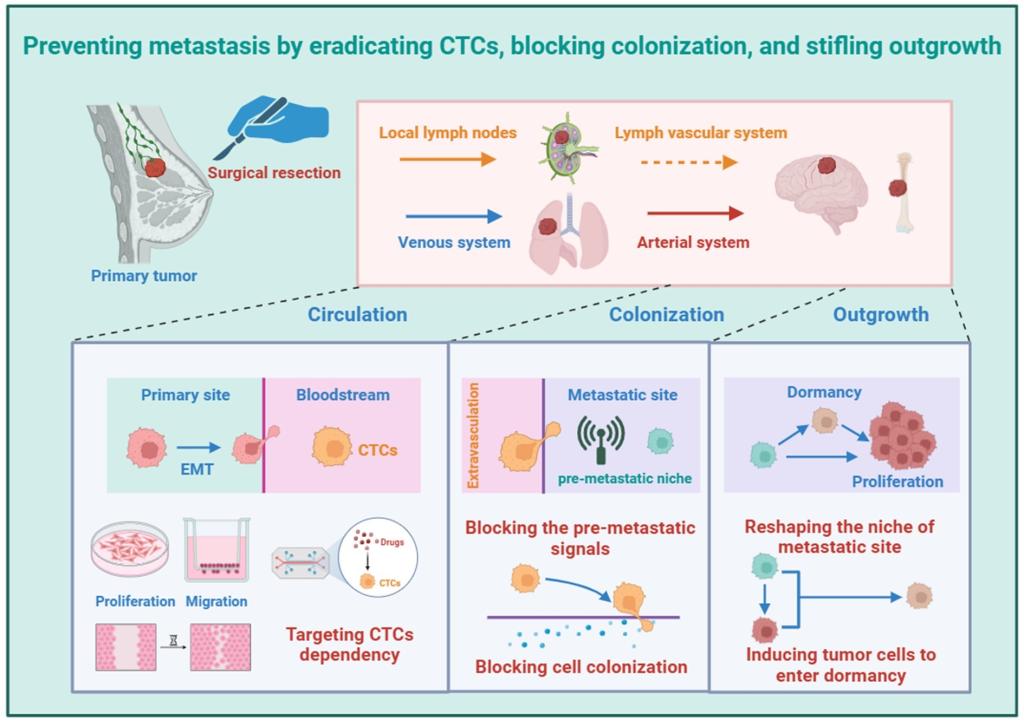
(2) Li Xiaoxi, Ren Weijun, Liu Ling, Liu Chuan, Chen Xiang. A Critical Reassessment of Tumor Metastasis Simulation in Murine Models: Insights Into Methodological Advances and Biological Relevance. Advanced Therapeutics. 2025;8(12):e00277.
Abstract: Metastasis drives treatment failure and cancer mortality, yet preclinical studies still rely heavily on subcutaneous xenograft models that prioritize tumor growth over metastatic biology. This disconnection from clinical reality significantly contributes to the high failure rate of experimental therapies in trials. Here, current mechanistic insights is integrated into metastasis and critically assess transplantation models to inform rational model selection for metastasis research. Tumor transplantation models exhibit distinct dissemination patterns governed by implantation methodology rather than intrinsic tumor properties. Subcutaneous models, while technically accessible, predominantly assess primary tumor growth and fail to capture critical metastatic steps like intravasation, pre-metastatic niche formation, and organotropism. Orthotopic transplantation faithfully replicates native tissue microenvironments, enabling simultaneous assessment of tumor growth and metastatic potential. Intravascular models, while inducing rapid colonization, distort natural metastatic progression by skipping early dissemination stages. Metastatic site transplantation isolates microenvironmental impacts on tumor adaptation but fails to capture de novo metastatic initiation. Ultimately, three strategies is proposed for preventing metastasis: Eradicating circulating tumor cells, blocking colonization, and stifling outgrowth. This perspective catalyzes the strategic advancement of tumor metastasis models, thereby strengthening the reliability of preclinical findings and accelerating their clinical translation.
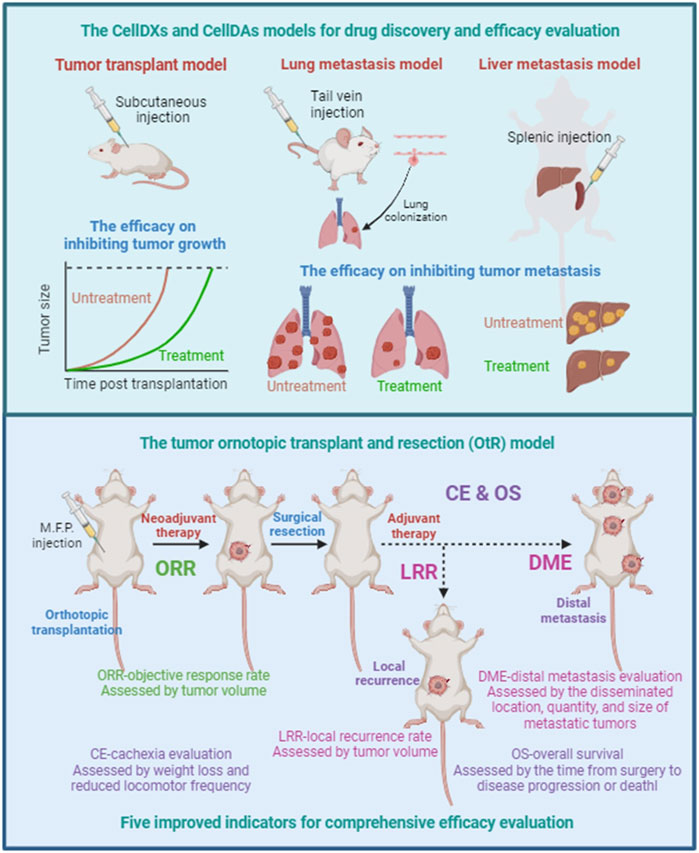
(1) Li Xiaoxi, Luo Lingli, Qian Hui. Improving the predictive accuracy of efficacy evaluation using tumor orthotopic transplant and resection model. Frontiers in Pharmacology. 2024;15:1309876
Abstract: Preclinical efficacy evaluation and tumor drug sensitivity analysis are two main applications of efficacy evaluation. Preclinical efficacy evaluation is to predict whether candidate drugs or therapies may improve patient outcomes in clinical trials. Tumor drug sensitivity analysis is an approach for the personalized evaluation and optimization of approved anti-cancer drugs and treatment regimens. Overall survival (OS) is the gold standard to evaluate the outcome of drugs or therapies in both clinical trials and clinical treatment. Many efficacy evaluation models, such as cell model, tumor cell-line transplant model, patient-derived tumor xenograft model, tumor organoid model, have been developed to assess the inhibitory effect of tested drugs or therapies on tumor growth. In fact, many treatments may also lead to malignant progression of tumors, such as chemotherapy, which can lead to metastasis. Therefore, tumor growth inhibition does not necessarily predict OS benefit. Whether it can prevent or inhibit tumor recurrence and metastasis is the key to whether drugs and therapies can improve patient outcomes. In this perspective, we summarize the current understanding of the pathological progression of tumor recurrence and metastasis, point out the shortcomings of existing tumor transplant models for simulating the clinical scenario of malignant progression of tumors, and propose five improved indicators for comprehensive efficacy evaluation to predict OS benefit using tumor orthotopic transplant and resection model. Improvement in the accuracy of efficacy evaluation will accelerate the development process of anti-cancer drugs or therapies, optimize treatment regimens to improve OS benefit, and reduce drug development and cancer treatment costs.