|
个人信息:Personal Information
副教授 硕士生导师
教师英文名称:Xiaoxi Li
教师拼音名称:lixiaoxi
所在单位:医学院
职称:副教授
毕业院校:分子细胞科学卓越创新中心
硕士生导师
学科:临床检验诊断学
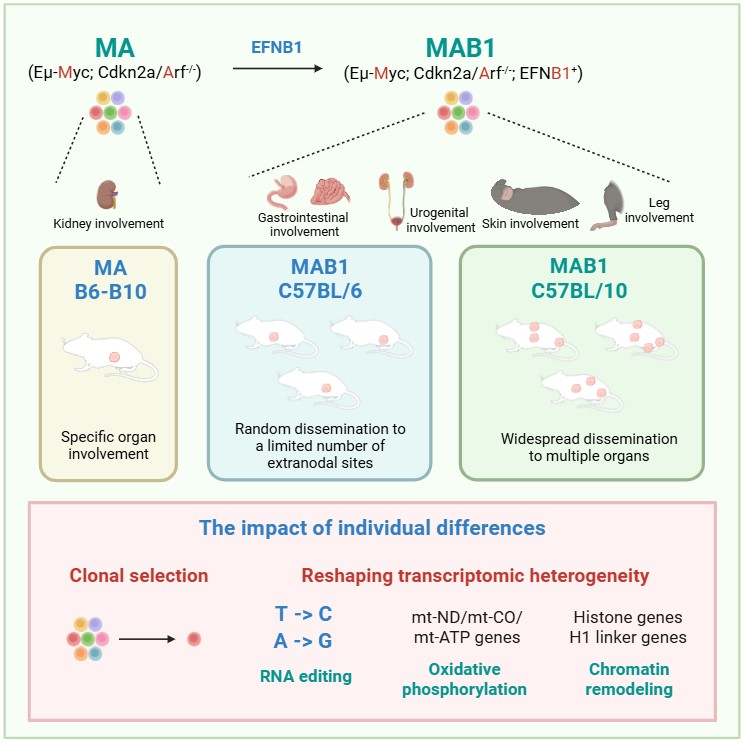
(5) Li Xiaoxi, Deng Minyao, Jiang Yong, Luo Lingli, Zhang Chenxiao, Tang Hua, Wei Zhuang, Leng Jiayan, Chuan Liu. Host heterogeneity shapes clonal selection and organotropism in an extranodal lymphoma mouse model. Cell Death & Disease. 2026, 17(1):
Abstract: Tumor metastasis is a leading cause of patient mortality, with tumor dissemination and organotropism representing critical yet complex aspects of tumor biology that involve clonal selection and evolutionary dynamics. Current experimental models inadequately recapitulate the spatiotemporal dissemination and phenotypic heterogeneity of human cancers, highlighting a critical need for more physiologically relevant preclinical platforms. In this study, we utilized a kidney-tropic primary extranodal lymphoma model to explore the role of EFNB1 in lymphoma dissemination across two distinct mouse strains, C57BL/6J and C57BL/10J. Intriguingly, EFNB1-overexpressing lymphoma cells displayed markedly different progression rates and colonization patterns in these strains. EFNB1-null and EFNB1-high lymphomas derived from the two strains underwent distinct clonal selection and exhibited significant transcriptomic heterogeneity, including RNA base substitutions, as well as differential expression of nuclear histone genes and mitochondrial respiratory chain genes. Notably, clonal origin alone did not determine lymphoma organotropism. Collectively, this study establishes a readily reproducible extranodal lymphoma model and demonstrates that host heterogeneity can reshape transcriptional heterogeneity, drive tumor clonal selection, and ultimately dictate organotropism. These findings suggest that host heterogeneity may serve as a valuable prognostic indicator for lymphoma.
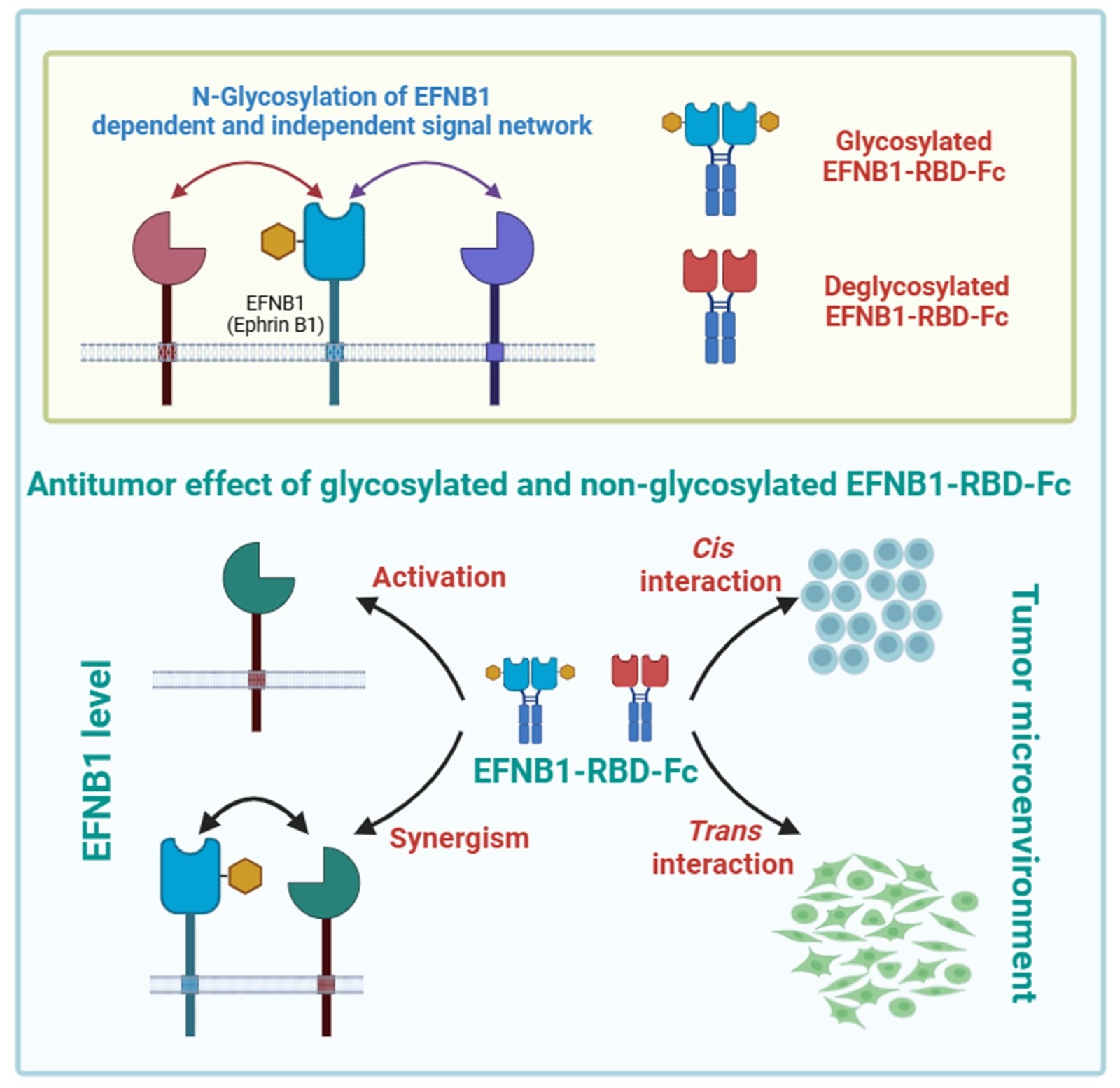
(4) Li Xiaoxi, Jiang Yong, Deng Minyao, Zhang Chenxiao, Tang Hua. N-glycosylation of ephrin B1 modulates its function and confers therapeutic potential in B-cell lymphoma. Journal of Biological Chemistry. 2025, 301(3): 108229
Abstract: Given the pivotal role of the Eph-Ephrin signaling pathway in tumor progression, agonists or antagonists targeting Eph/Ephrin have emerged as promising anticancer strategies. However, the implications of glycosylation modifications within Eph/Ephrin and their targeted protein therapeutics remain elusive. Here, we identify that N-glycosylation within the receptor-binding domain (RBD) of ephrin B1 (EFNB1) is indispensable for its functional repertoire. Notably, compared to wild-type EFNB1, the glycosylation-deficient N139D mutant drastically diminishes the sensitivity of tumor cells to chemotherapeutic agents, suggesting the existence of both glycosylation-dependent and independent effects mediated by EFNB1. Transcriptomic analysis highlights immune response and oxidative phosphorylation as the primary signaling pathways modulated by glycosylation modifications. In coculture systems, the EFNB1-RBD-Fc recombinant protein, while inhibiting B-lymphoma cells, also exerts differential impacts on stromal cells depending on their glycosylation status. Furthermore, the efficacy of both glycosylated and non-glycosylated EFNB1-RBD-Fc is influenced by the endogenous EFNB1 levels within tumor cells. Taking together, this study demonstrates the complexity and multifaceted roles of glycosylation in modulating EFNB1 function. These findings underscore the need for a nuanced understanding of glycosylation patterns in Eph/Ephrin-targeted therapies to optimize their therapeutic potential.
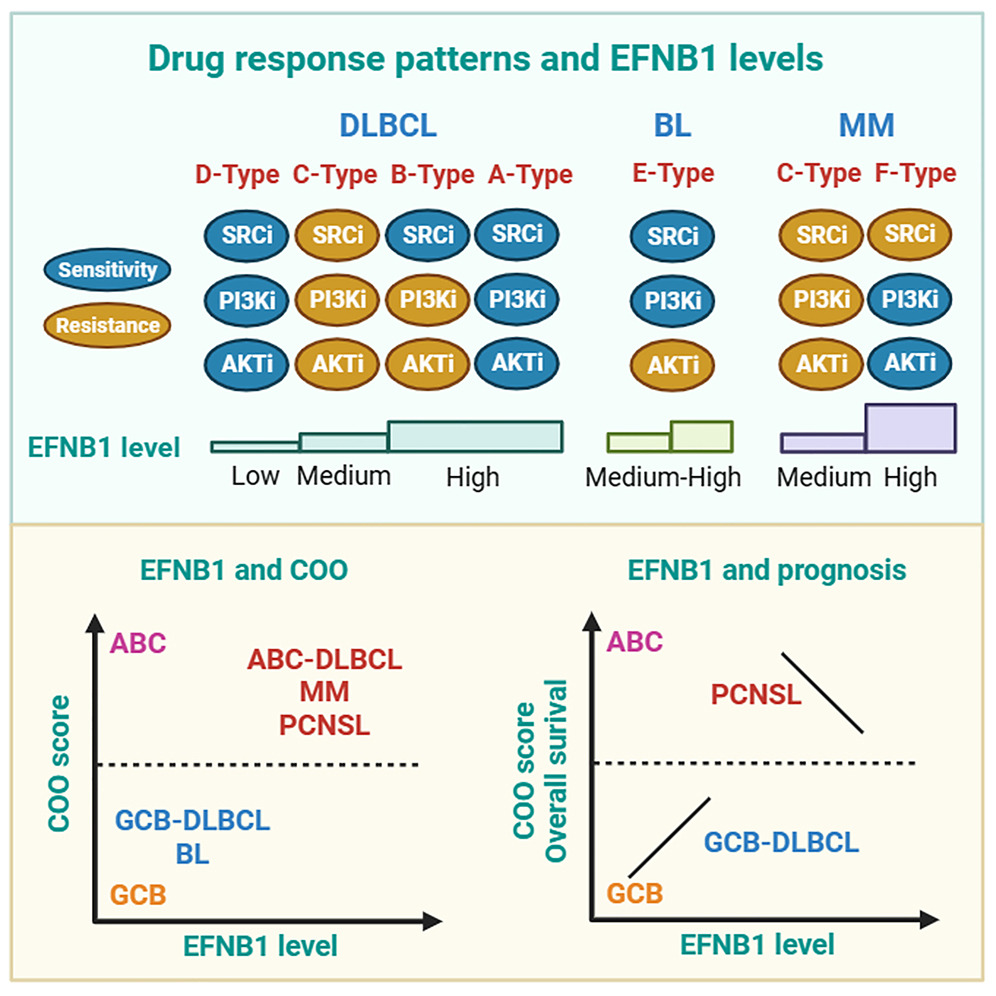
(3) Li Xiaoxi, Zhang Chenxiao, Deng Minyao, Jiang Yong, He Zhengjin, Qian Hui. EFNB1 levels determine distinct drug response patterns guiding precision therapy for B-cell neoplasms. iScience. 2024, 27: 108667
Abstract: The multi-omics data has greatly improved the molecular diagnosis of B-cell neoplasms, but there is still a lack of predictive biomarkers to guide precision therapy. Here, we analyzed publicly available data and found that B-cell neoplasm cell lines with different levels of EFNB1 had distinctive drug response patterns of inhibitors targeting SRC/PI3K/AKT. Overexpression of EFNB1 promoted phosphorylation of key proteins in drug response, such as SRC and STMN1, conferring sensitivity to SRC inhibitor and cytotoxic drugs. EFNB1 phosphorylation signaling network was significantly associated with the prognosis of GCB-DLBCL patients. Moreover, EFNB1 levels were correlated with cell of origin (COO) scores, suggesting that EFNB1 is a quantitative indicator of cell differentiation. Ultimately, we proposed a model for the stratification of human B-cell malignancies and the implementation of targeted therapies based on EFNB1 levels. Our findings highlight that EFNB1 level is a promising biomarker for predicting drug response, COO and prognosis.
(2) Li Xiaoxi, Jiang Yong, Qian Hui. Lymphoma dissemination is a pathological hallmark for malignant progression of B-cell lymphoma. Frontiers in Immunology. 2023, 14: 1286411
Abstract: Extranodal lymphoma occurs in one-third of lymphoma patients and is a key indicator of the international prognostic index, associated with unfavorable outcomes. Due to the lack of ideal models, the causes and characteristics of extranodal lymphoma are greatly underexplored. Recently, we observed a high incidence of extranodal lymphoma in two types of mouse models with tropism for the brain and kidneys. These findings prompt us to rethink the pathological progression of lymphoma colonization in lymph nodes and non-lymphoid organs. Nodal lymphoma, primary extranodal lymphoma and secondary extranodal lymphoma should be biologically and clinically distinctive scenarios. Based on the observations in mouse models with extranodal lymphoma, we propose that lymphoma dissemination can be seen as lymphoma losing the ability to home to lymph nodes. The pathological process of nodal lymphoma should be referred to as lymphoma homing to distinguish it from benign hyperplasia. Lymphoma dissemination, defined as a pathological process that lymphoma can occur in almost any part of the body, is a key pathological hallmark for malignant progression of B-cell lymphoma. Reshaping cellular plasticity is a promising strategy to allow transformed cells to homing back to lymph nodes and re-sensitize tumor cells to treatment. From this perspective, we provide new insights into the pathological progression of lymphoma dissemination and its inspiration on therapeutic interventions. We believe that establishing extranodal lymphoma mouse models, identifying molecular mechanism governing lymphoma dissemination, and developing therapies to prevent lymphoma dissemination will become emerging topics for fighting relapsed and refractory lymphoma.

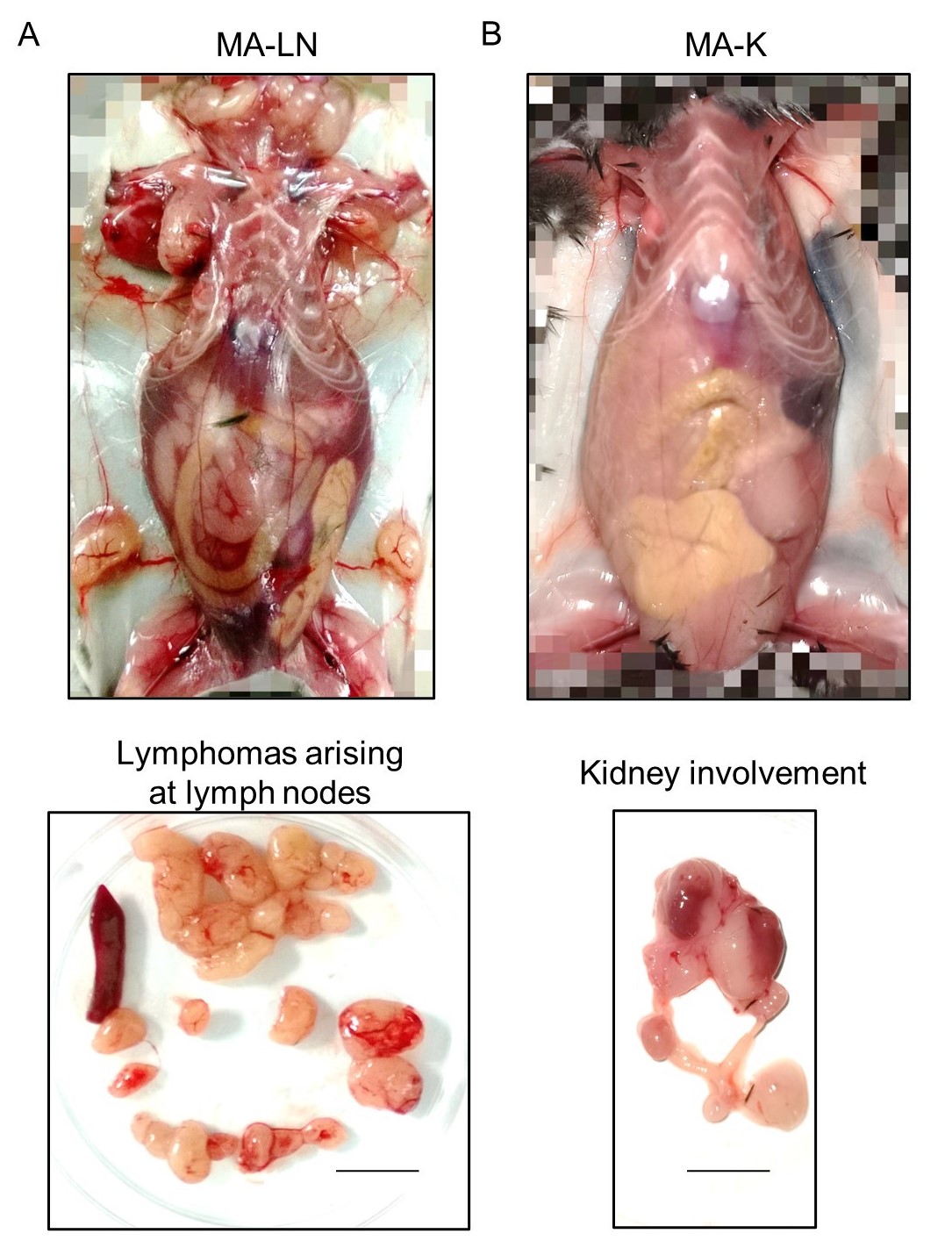
(1) Li Xiaoxi, Deng Minyao, Zhang Chenxiao, Luo Lingli, Qian Hui. Establishment of a primary renal lymphoma model and its clinical relevance. Frontiers in Oncology. 2023, 13: 1089187
Abstract: Extranodal dissemination is an important feature of aggressive B-cell lymphoma. Due to the lack of available animal models, the study on extranodal dissemination of lymphoma is greatly limited. Here, we identified a novel cell line, named MA-K, which originated from the Eμ-Myc;Cdkn2a-/- cell line, named MA-LN in this study. Compared to MA-LN, MA-K tended to disseminate in the kidney rather than lymph nodes in lymphoma transplantation model, resembling human primary renal lymphoma. The transcriptome analysis revealed that MA-K had undergone the transcriptional evolution during the culture. Specialized transcriptional pattern analysis, we proposed in this study, identified that FOXO1-BTG1-MYD88 pattern was formed in MA-K. Further analysis found that translation pathway was the most enriched pathway in specially expressed genes (SEGs) in MA-K. Among the SEGs, 3 up-regulated genes, RPLP2, RPS16 and MRPS16, and 5 down-regulated genes, SSPN, CD52, ANKRD37, CCDC82 and VPREB3, in MA-K were identified as promising biomarkers to predict the clinical outcomes of human DLBCL. Moreover, the joint expression of the 5-gene signature could effectively predict clinical outcomes of human DLBCL in triple groups. These findings suggested that the MA-K cell line had strong clinical relevance with human aggressive B-cell lymphoma. Moreover, the MA-K primary renal lymphoma model, as a novel syngenetic mouse model, will be greatly useful for both the basic research on lymphoma dissemination and preclinical efficacy evaluation of chemotherapy and immunotherapy.