
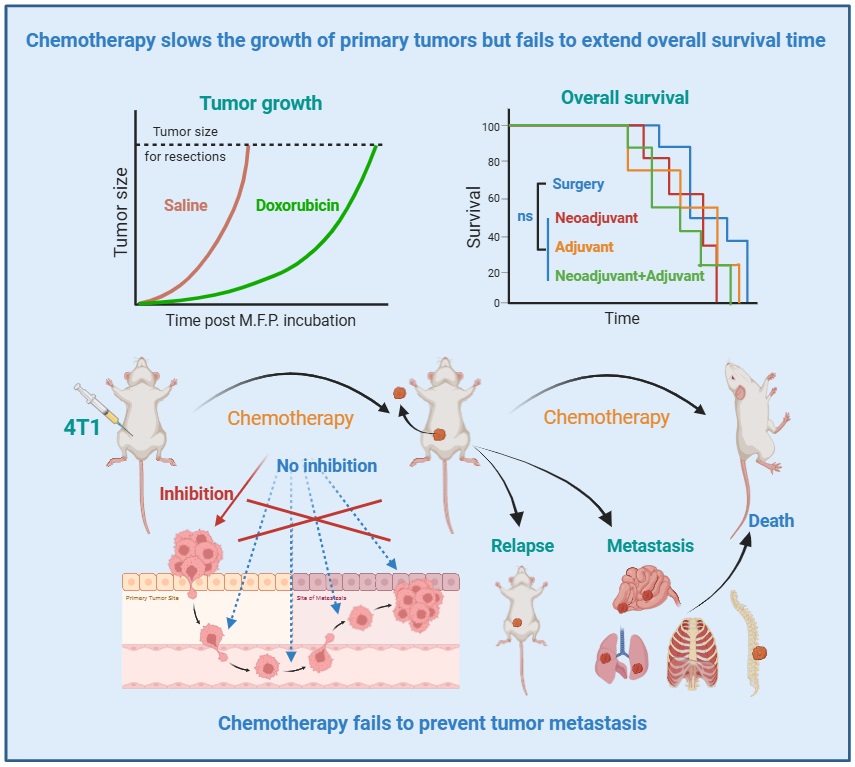
(2) Luo lingli, Liu Ling, Deng Mingyao, Jiang yong, Liu Chuan, Chen Xiang, Li Xiaoxi. The OtR tumor recurrence and metastasis model reveals doxorubicin‐induced tumor shrinkage doesn't guarantee prolonged survival. Animal Models and Experimental Medicine. 2026;00:1-8.
Abstract: Background: In preclinical research, tumor growth inhibition in subcutaneous models is frequently employed to evaluate therapeutic efficacy; however, such models often lack clinical translatability. Methods: To better approximate clinical reality, taking the case of doxorubicin treatment, we utilized an orthotopic transplant and resection (OtR) strategy to systematically assess the effects of neoadjuvant chemotherapy, adjuvant chemotherapy, and their combination on tumor growth, recurrence, and malignant progression. Results: Surprisingly, none of the treatments improved mouse survival, with adjuvant therapy even shortening it. Although neoadjuvant chemotherapy delayed preoperative tumor growth and all regimens reduced recurrence rates, none effectively prevented metastasis. Furthermore, all treatment groups exhibited weight loss, indicative of chemotherapy-induced cachexia. Conclusion: Collectively, these findings demonstrate that reduced tumor growth in preclinical mouse models does not necessarily translate into overall survival benefit. Our results emphasize the critical importance of prioritizing metastasis prevention over tumor growth inhibition as a key efficacy endpoint in antitumor drug evaluation.
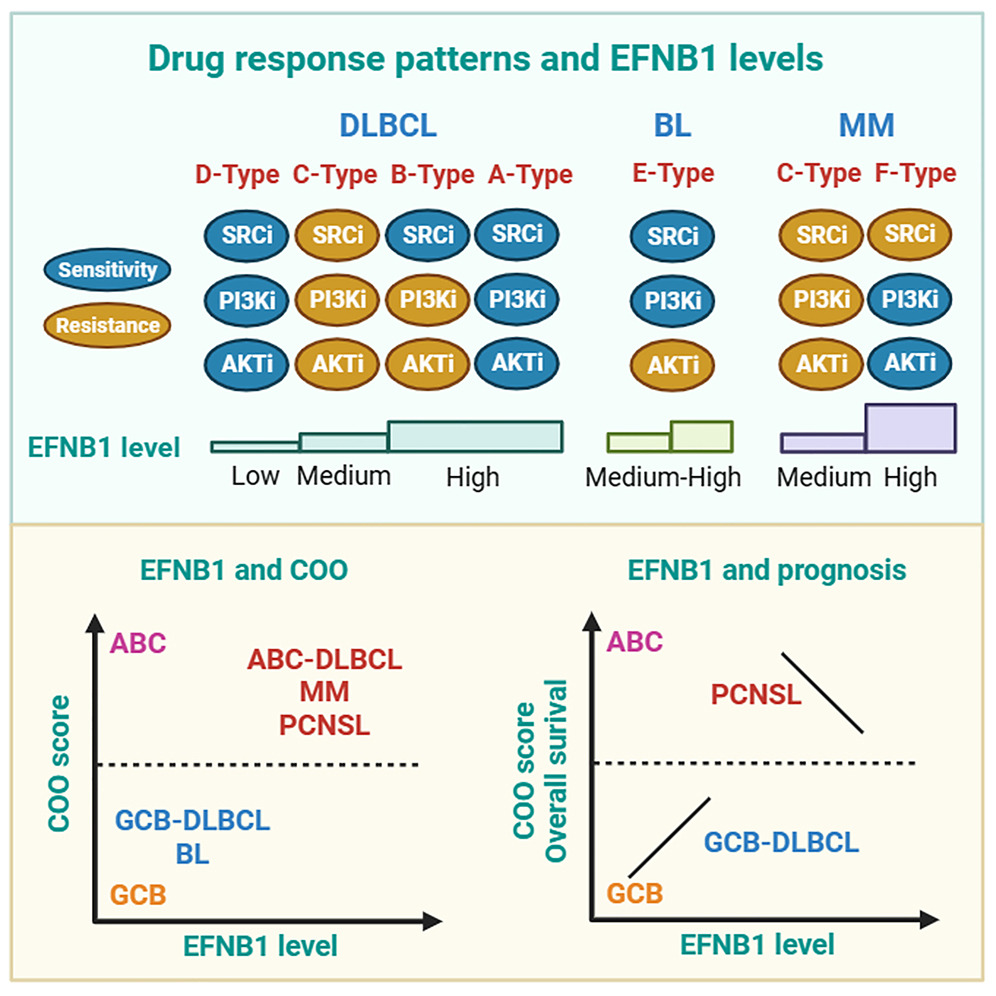
(1) Li Xiaoxi; Zhang Chenxiao*; Deng Minyao*; Jiang Yong; He Zhengjin; Qian Hui ; EFNB1 levels determine distinct drug response patterns guiding precision therapy for B-cell neoplasms, iScience, 2024, 27: 108667
Abstract: The multi-omics data has greatly improved the molecular diagnosis of B-cell neoplasms, but there is still a lack of predictive biomarkers to guide precision therapy. Here, we analyzed publicly available data and found that B-cell neoplasm cell lines with different levels of EFNB1 had distinctive drug response patterns of inhibitors targeting SRC/PI3K/AKT. Overexpression of EFNB1 promoted phosphorylation of key proteins in drug response, such as SRC and STMN1, conferring sensitivity to SRC inhibitor and cytotoxic drugs. EFNB1 phosphorylation signaling network was significantly associated with the prognosis of GCB-DLBCL patients. Moreover, EFNB1 levels were correlated with cell of origin (COO) scores, suggesting that EFNB1 is a quantitative indicator of cell differentiation. Ultimately, we proposed a model for the stratification of human B-cell malignancies and the implementation of targeted therapies based on EFNB1 levels. Our findings highlight that EFNB1 level is a promising biomarker for predicting drug response, COO and prognosis.
Associate professor
Supervisor of Master's Candidates
Alma Mater : CEMCS-SIBCB
Discipline:Clinical Laboratory Diagnostics
The Last Update Time : ..

